Overview
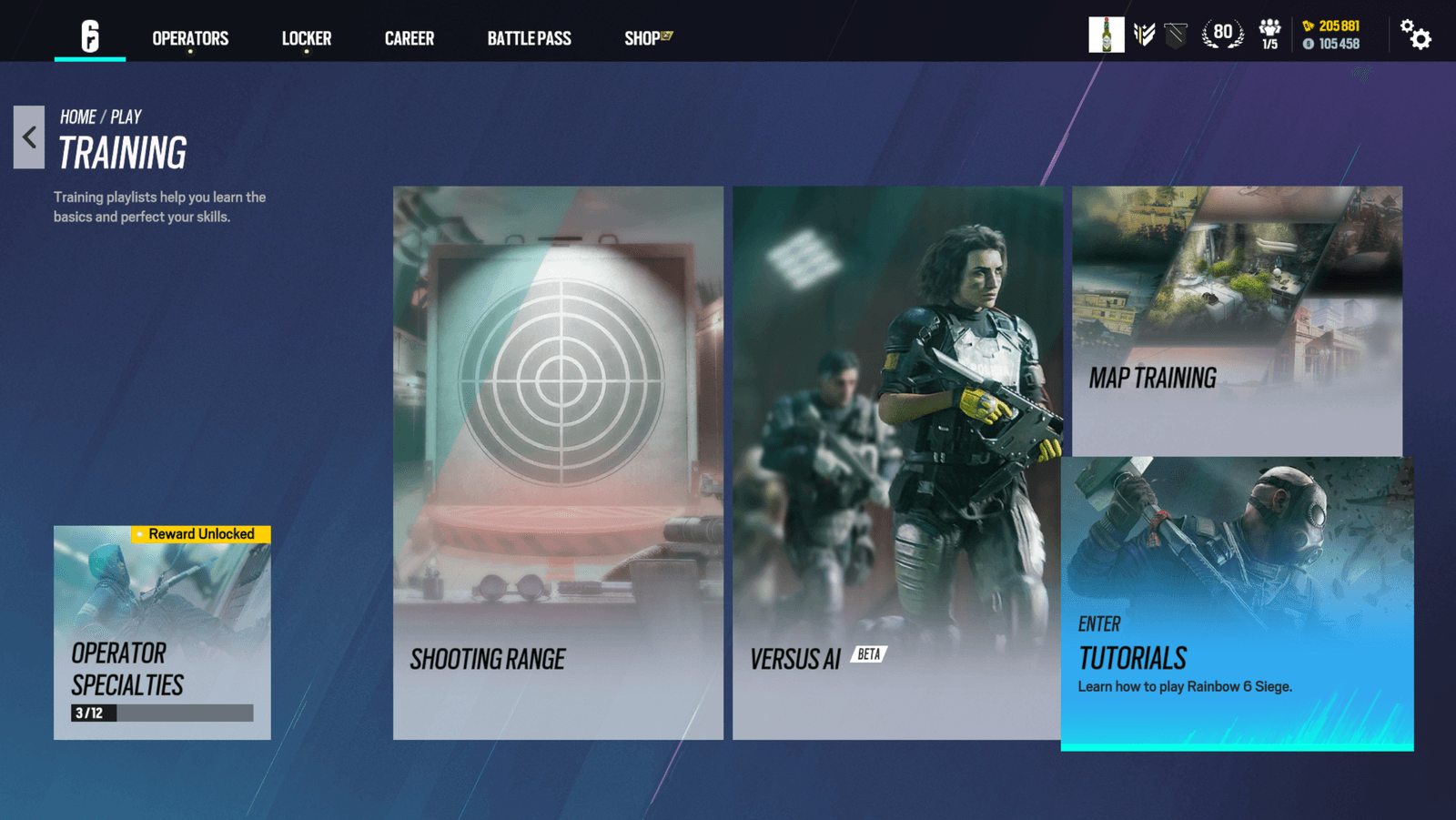
The sequence of features new players meet when they first launch the game: Tutorials, Newcomer Challenges, the Versus AI playlist and menu guidance. I led how these pieces fit together, and the flow keeps evolving with the live game.
Challenge
New players got lost moving from feature to feature and dropped off before completing the steps they needed to play on their own.
Solution
Orchestrating the system: ordering the mechanics and gating complexity, so each step builds on the last.
Impact
+10% D1 and +5% D28 retention. See the full player journey flow.
Tools
Figma, Miro, architecture mapping, user journeys, mind maps, stakeholder workshops, competitor benchmarks and A/B testing.
In depth
The methods and tools I chose for this project. They change with every project, depending on what the problem needs.
Setting up: asking the right questions
- How do we prioritize which features go first?
- What mechanics are key?
- What do we teach and not teach?
- If the core game is so hard, would players benefit from mandatory Tutorials?
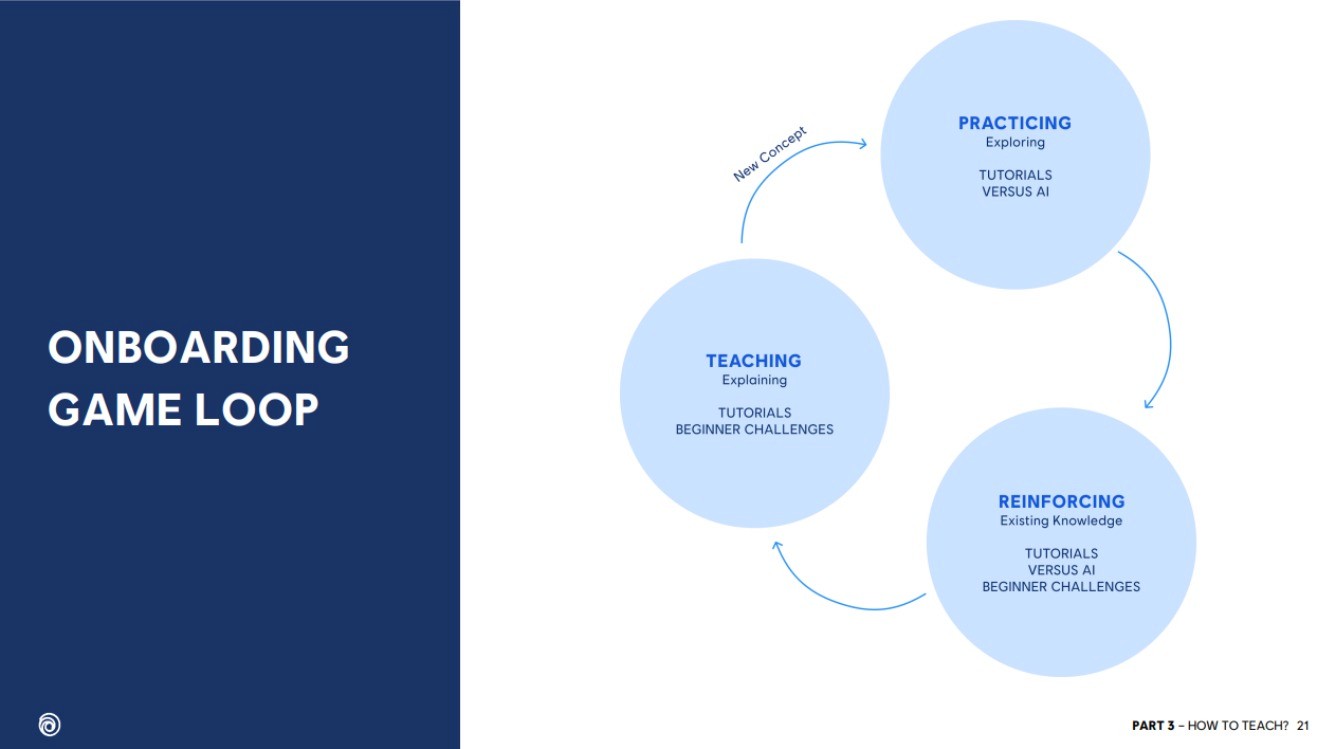
Question 1: the loop
Teach, practice, reinforce: this loop decided where each feature sat in the journey.
Question 2: mechanic analysis
Working out what to prioritize for beginners.
- List the skills each gameplay feature needs.
- Sort them by level. Beginner: switching weapons and the bomb objective. Mid: gadgets and map navigation. Advanced: map control and team tactics.
- Choose a player type and focus on one level.
Results
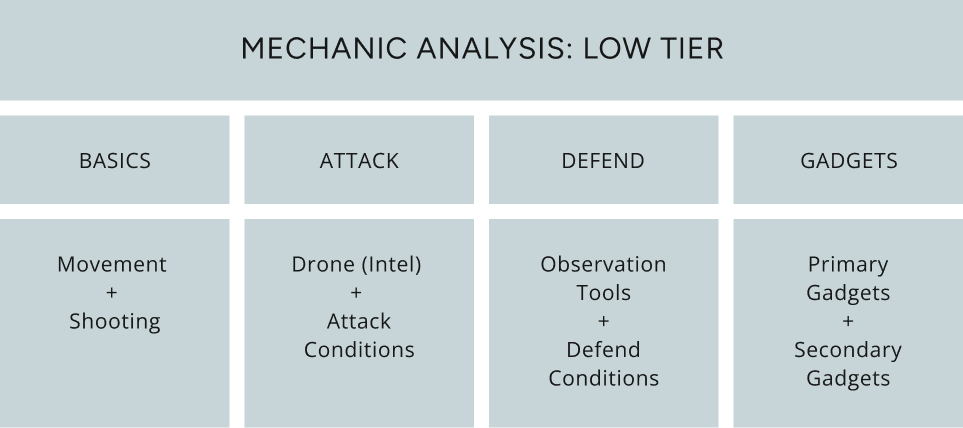
Against our three objectives, a safe space, self-sufficiency and the game's core selling points, we chose the most relevant mechanics for newcomers. They became the focus of the three Tutorials.
Question 3: learn study
We mapped what newcomers were missing and what needed teaching. See the related Learn Loop research study.
- Investigation: missing learnings.
- Definition: what is needed for skill.
- Classification: teach or not.
- Clustering: in related groups.
- Clean: leave what needs to be taught.
- Brainstorm: based on final groups.
Results
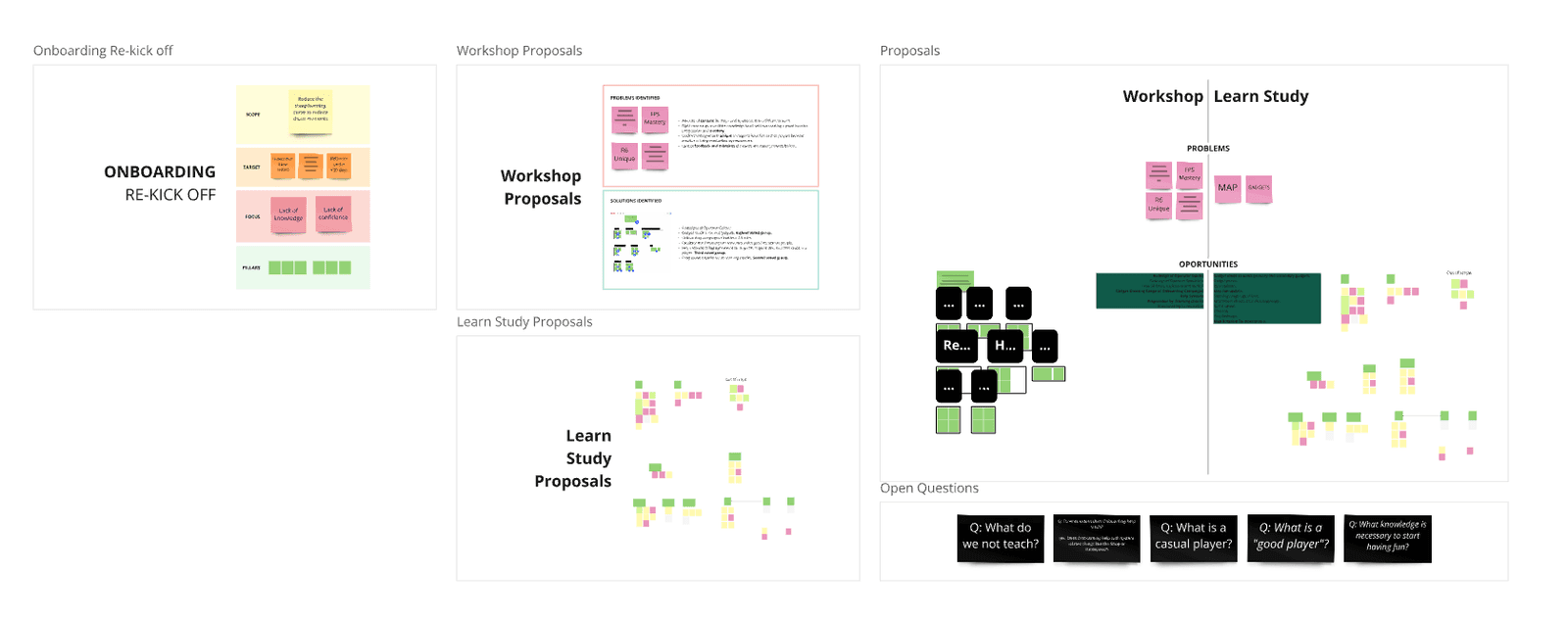
We split teaching into active and passive to find the gaps:
- We mapped the player journey and its place in the player life cycle, to focus on one stage.
- We brainstormed and discussed the results with the team and the directors.
Question 4: A/B test
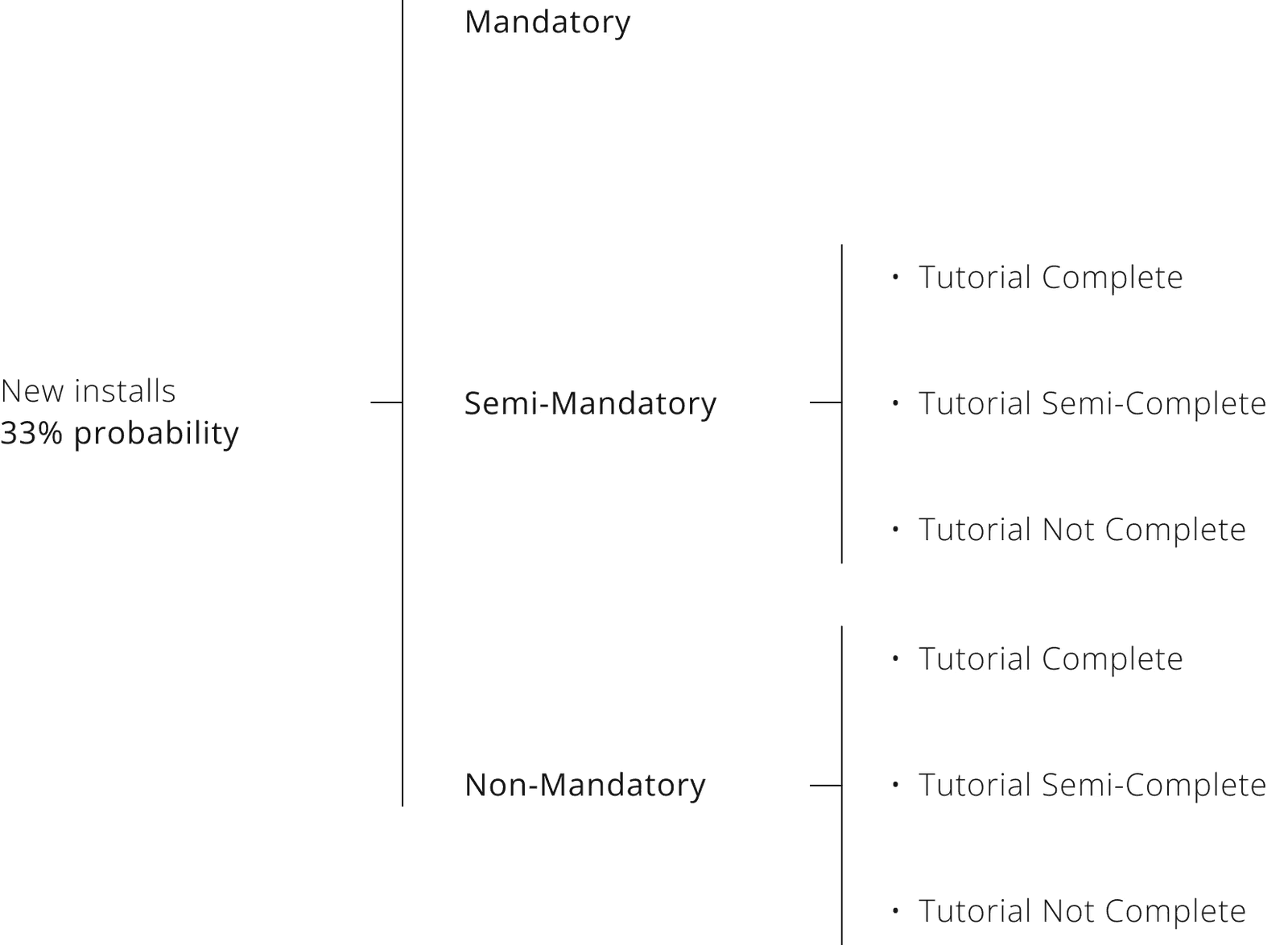
To choose the right flow for the move to free-to-play, we tested three versions: mandatory Tutorials, optional Tutorials and a single Tutorial.
The hypothesis
Making players complete every Tutorial will improve learning, because they will train all the skills Rainbow Six needs.
Results
This was the game's first A/B test, run with the Data and Onboarding teams. Against our expectations, there was no statistically significant difference between the three groups, so we chose a semi-mandatory flow as the middle ground.
Insights
Key takeaways from the project.
- A null result is still a result. The A/B test showed no difference between forcing Tutorials and leaving them optional, so we chose the flow that gave players more agency.
- Not every win shows up in the numbers. Some changes weren't statistically significant but had a clear qualitative impact.
- Work around what you can't change. The core game stayed hard, so we made the way into it more comfortable.