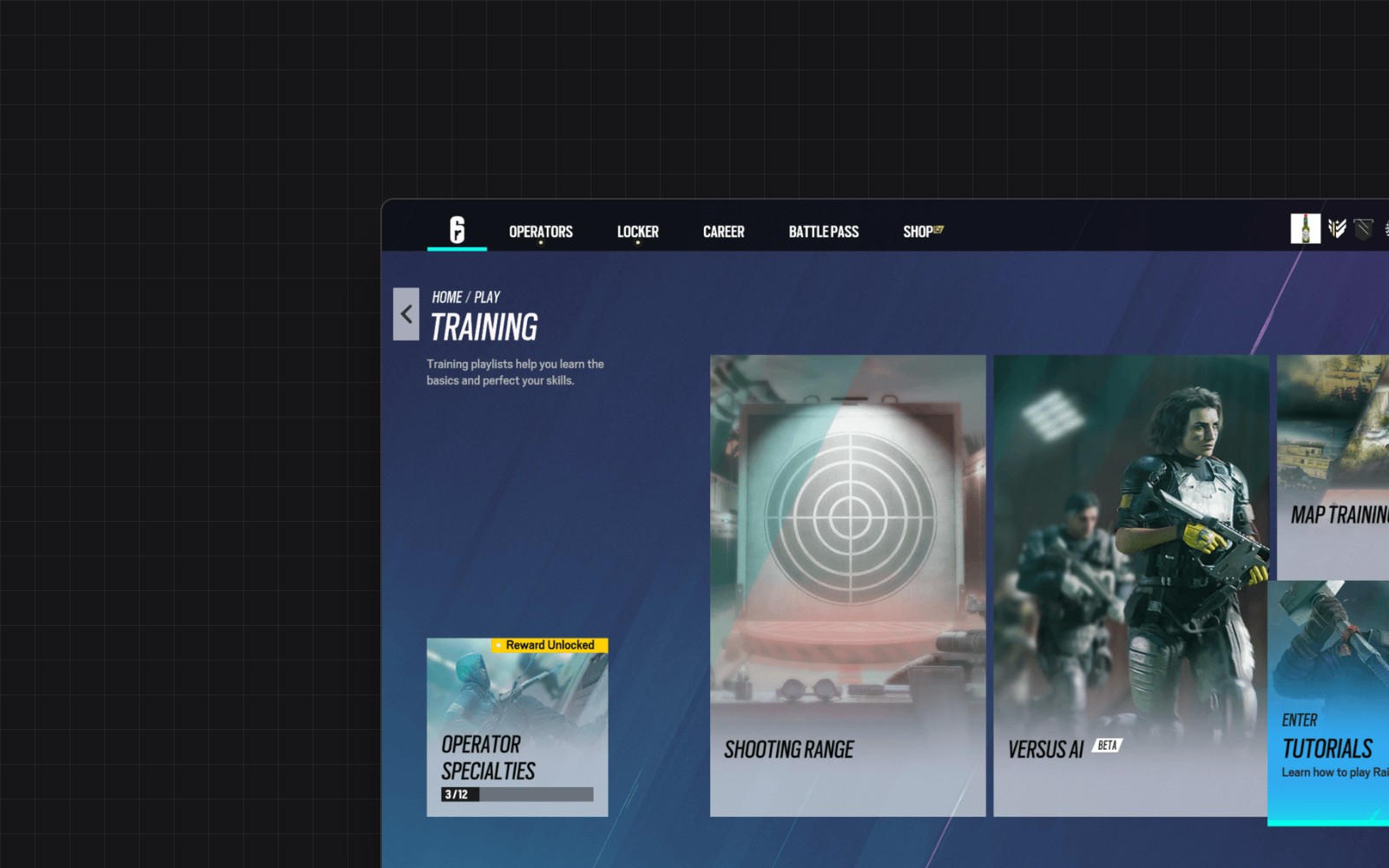
Diegetic UI
Overview
The Shooting Range: a training space for aim and damage, with adjustable distances and targets, a quick reset, and accessibility-aware visuals that keep recoil patterns easy to tell apart.
Challenge
Players tested weapons and recoil inside matches or in unstable modes, which was inefficient and frustrating.
Solution
A practice range where players train aim, recoil control and damage knowledge.
Impact
Usage went up 20%. It peaks when new weapons or attachments launch and when players set up loadouts. Pros use it before matches, and it was added to the matchmaking queue.
Tools
Figma, 3D engine, accessibility analysis, blueprints, 3D wireframes and functionality prioritization.
In depth
The methods and tools I chose for this project. They change with every project, depending on what the problem needs.
Process
- Competitor benchmark on Valorant, Overwatch, Call of Duty and Apex.
- Problem statement defined from our players' pain points.
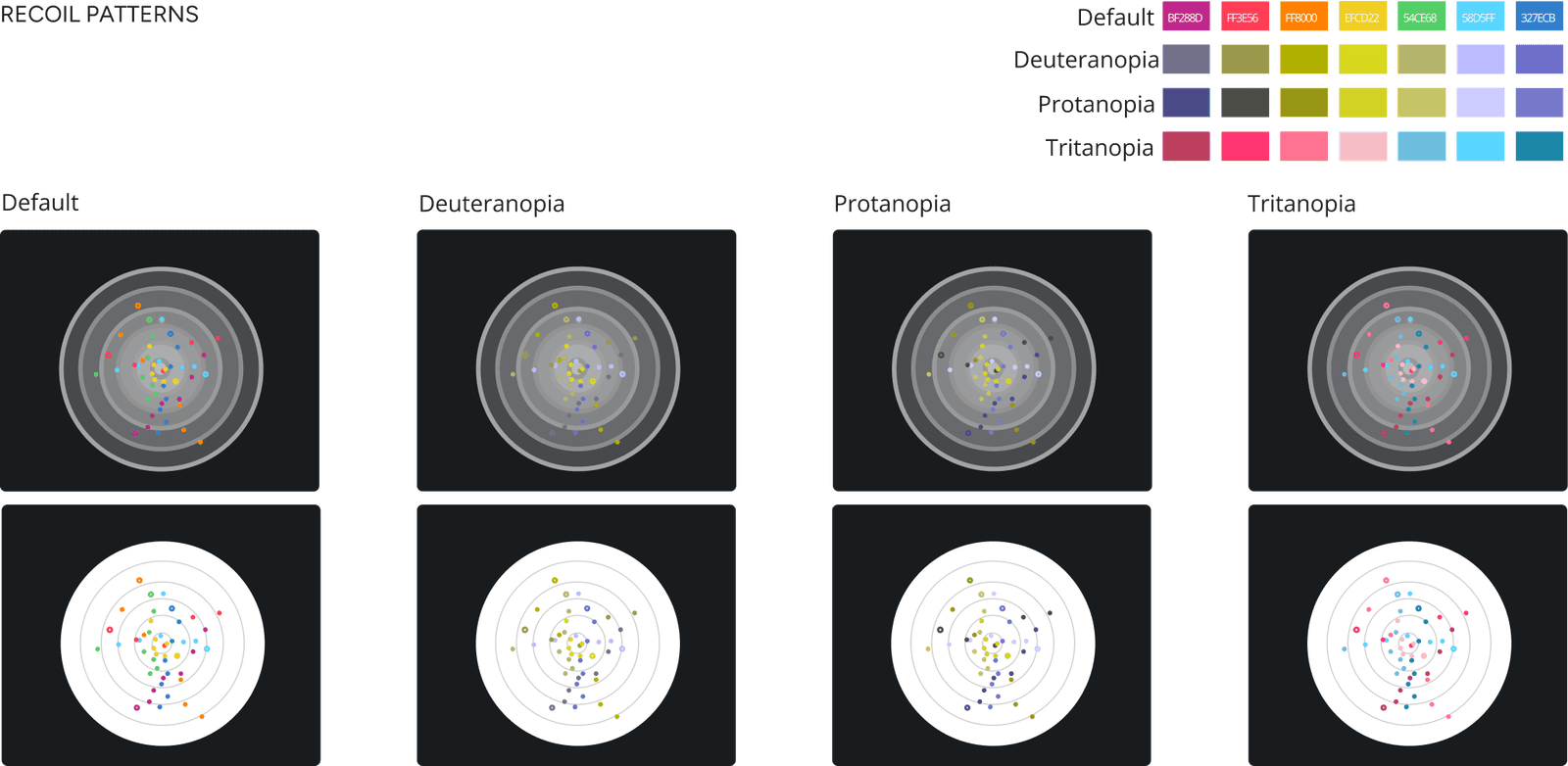
- Accessibility study to make recoil patterns distinguishable from one another.
Functionalities
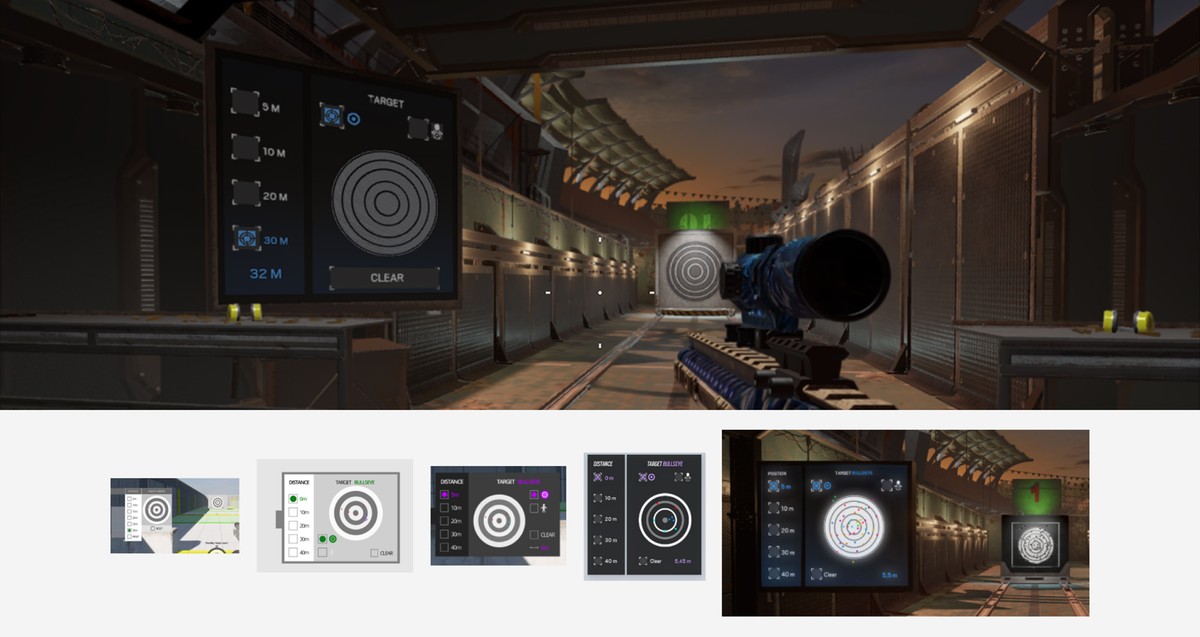
Aiming lane
- Differentiate recoil patterns.
- Practice shot accuracy.
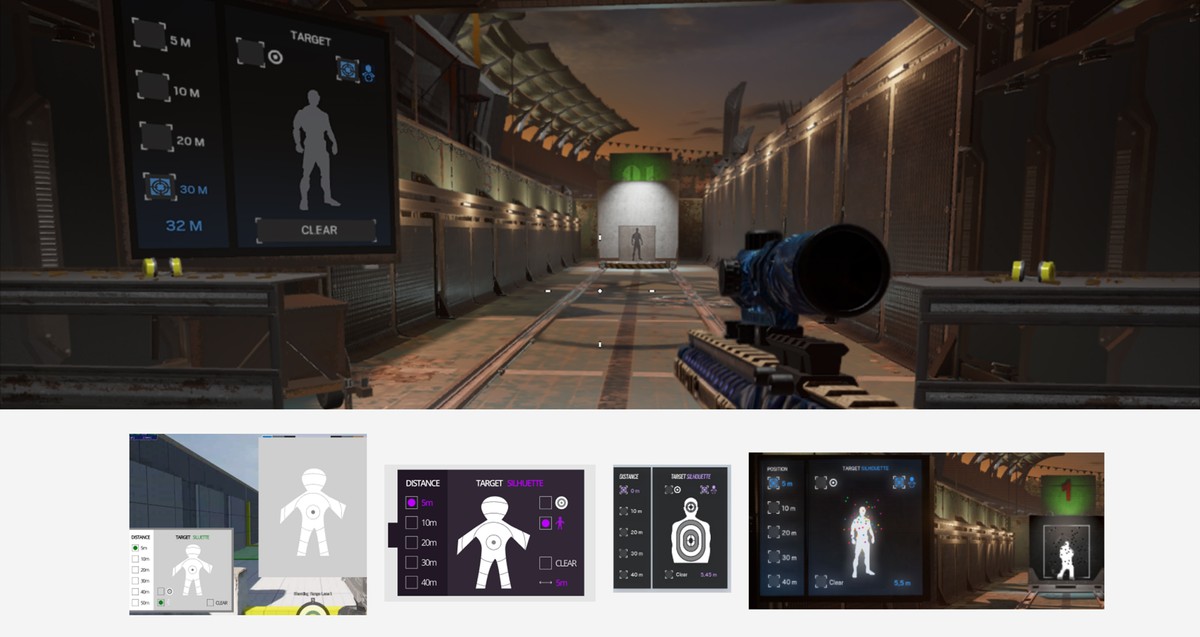
- Choose target distance.
- Choose bullseye or silhouette.
- Reset option.
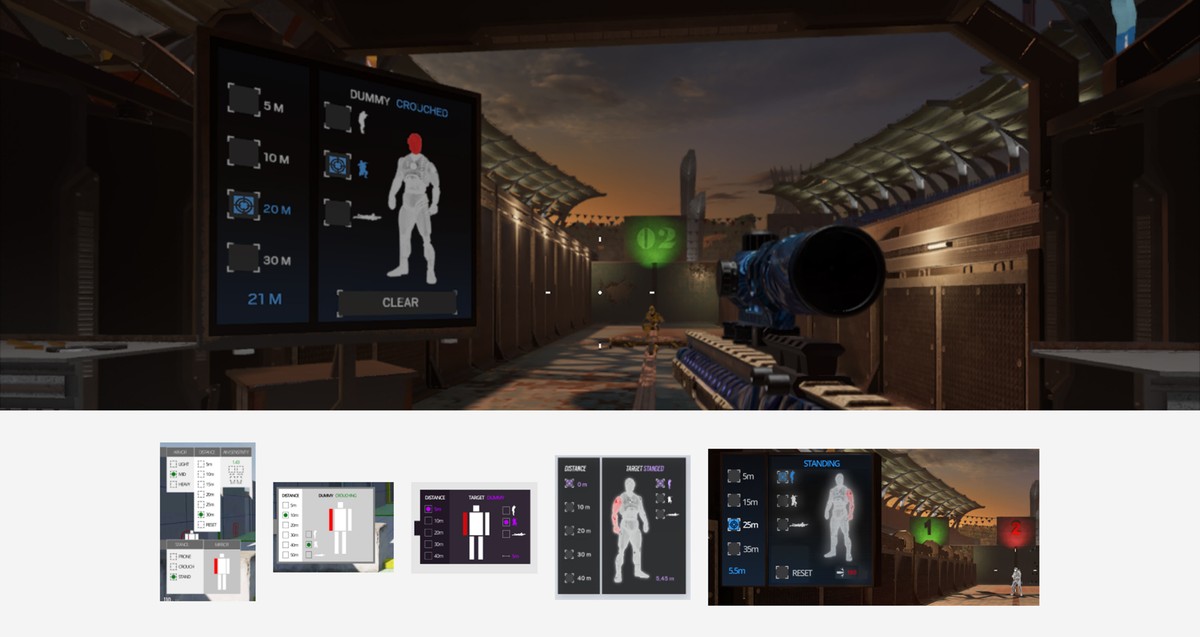
Damage lane
- Understand damage dealt.
- Practice body shot accuracy.
- Choose target distance.
- Choose a dummy stance.
- Reset option.
Level design vs interaction
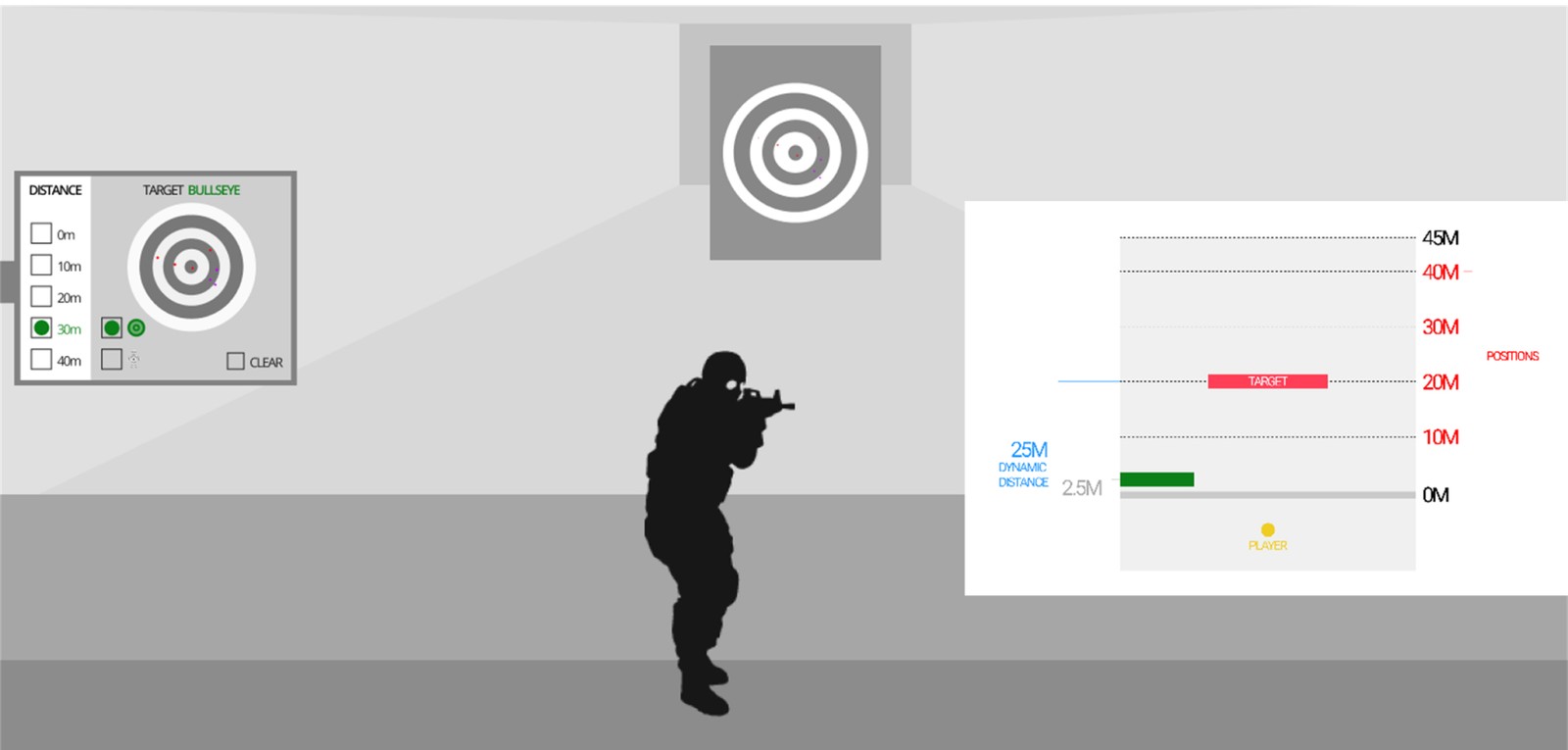
Distance blueprint
- Distances for every weapon, from close-range shotgun to sniper.
- Panel sizes balanced proportions with how easy they were to shoot.
Proportions
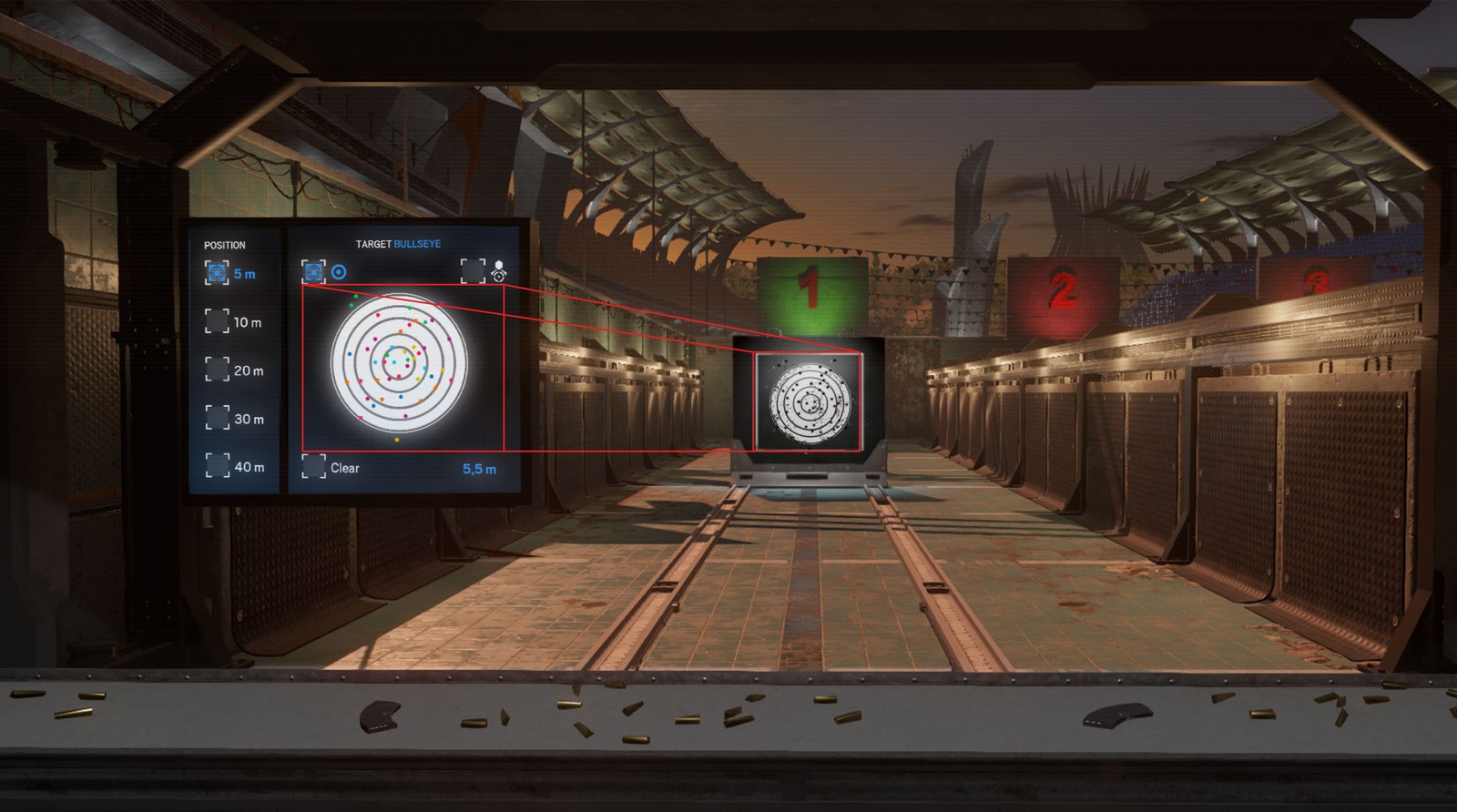
Accessibility study
We chose this palette because it kept higher contrast than the alternatives across types of color blindness.
Evolution of lanes
Insights
Key takeaways from the project.
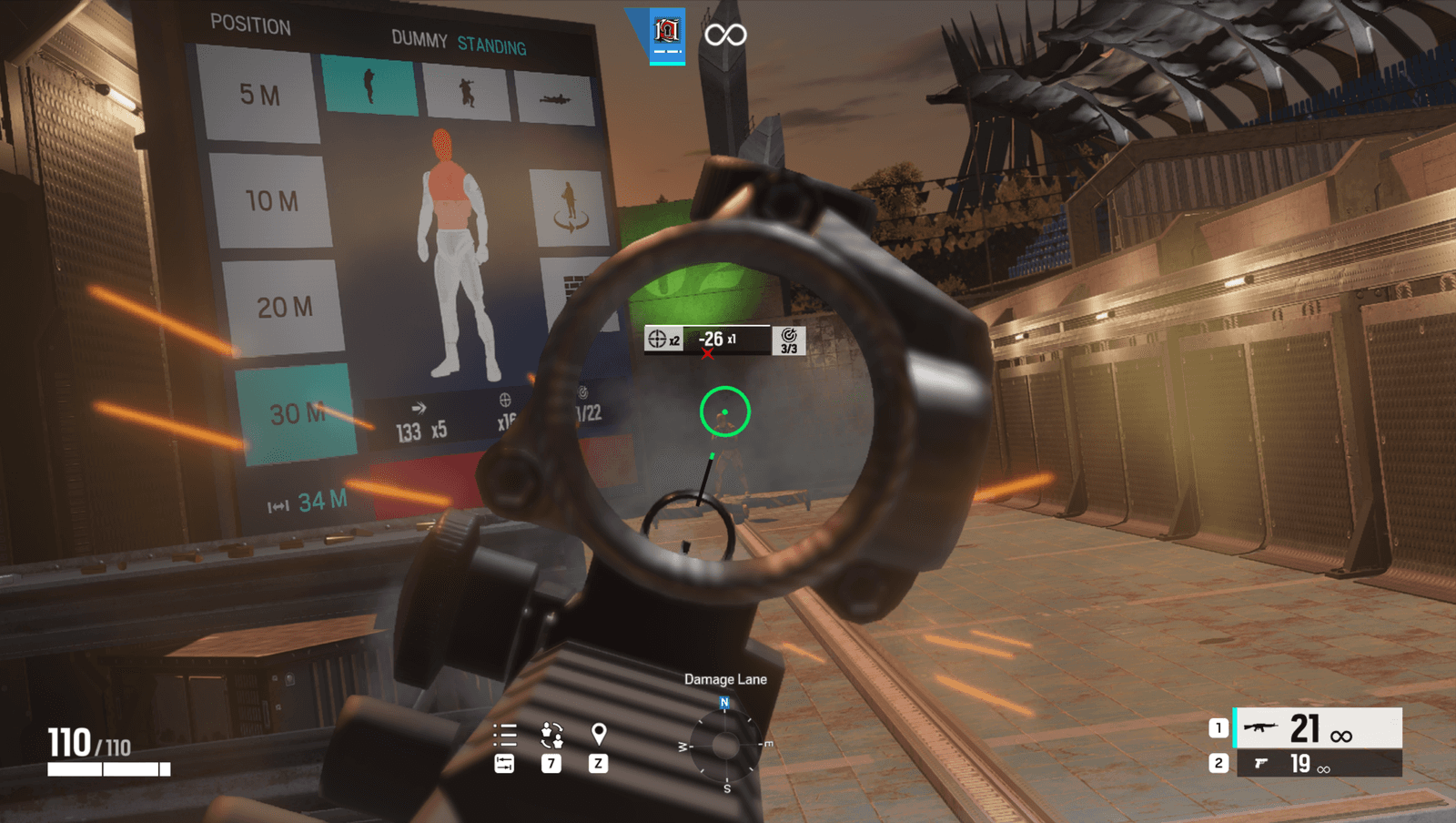
What testing and release showed:
- A mismatch between the shooting wall and the mirror screen.
- Weapons and recoil patterns were hard to remember together, which showed the need for shooting records.
- Changing loadouts was tedious, which created a need for an accessories shortcut.
- The interaction areas were too small, so we enlarged them.
- There was an opportunity to offer it during matchmaking, as a warm-up.