SUMMARY
SUMMARY
SUMMARY
SCOPE
SCOPE
SCOPE
Operator role taxonomy (playstyles) and a challenge progression that reinforces learning through practice.
Operator role taxonomy (playstyles) and a challenge progression that reinforces learning through practice.
PROBLEM
PROBLEM
PROBLEM
New players struggled to (1) understand the roster and (2) form a playstyle mental model—so knowledge decayed after tutorials.
New players struggled to (1) understand the roster and (2) form a playstyle mental model—so knowledge decayed after tutorials.
DESCRIPTION
DESCRIPTION
DESCRIPTION
Reinforce learning of Tutorials or about specific concepts difficult to teach there, all of which were more practical and happen in the game by play style, while giving rewards to retain new players.
Reinforce learning of Tutorials or about specific concepts difficult to teach there, all of which were more practical and happen in the game by play style, while giving rewards to retain new players.
BACKGROUND
BACKGROUND
BACKGROUND
In the learning cycle practice is required, this is the practice side of what new players learn through in game quests.
In the learning cycle practice is required, this is the practice side of what new players learn through in game quests.
GOAL
GOAL
GOAL
Motivating players through rewards to foster progression and knowledge.
Motivating players through rewards to foster progression and knowledge.
TOOLS
TOOLS
TOOLS
Figma, Miro, Ubisoft’s 3D Engine, Jira, Accessibility analysis, and UI auditory.
Figma, Miro, Ubisoft’s 3D Engine, Jira, Accessibility analysis, and UI auditory.
OVERVIEW
OVERVIEW
OVERVIEW
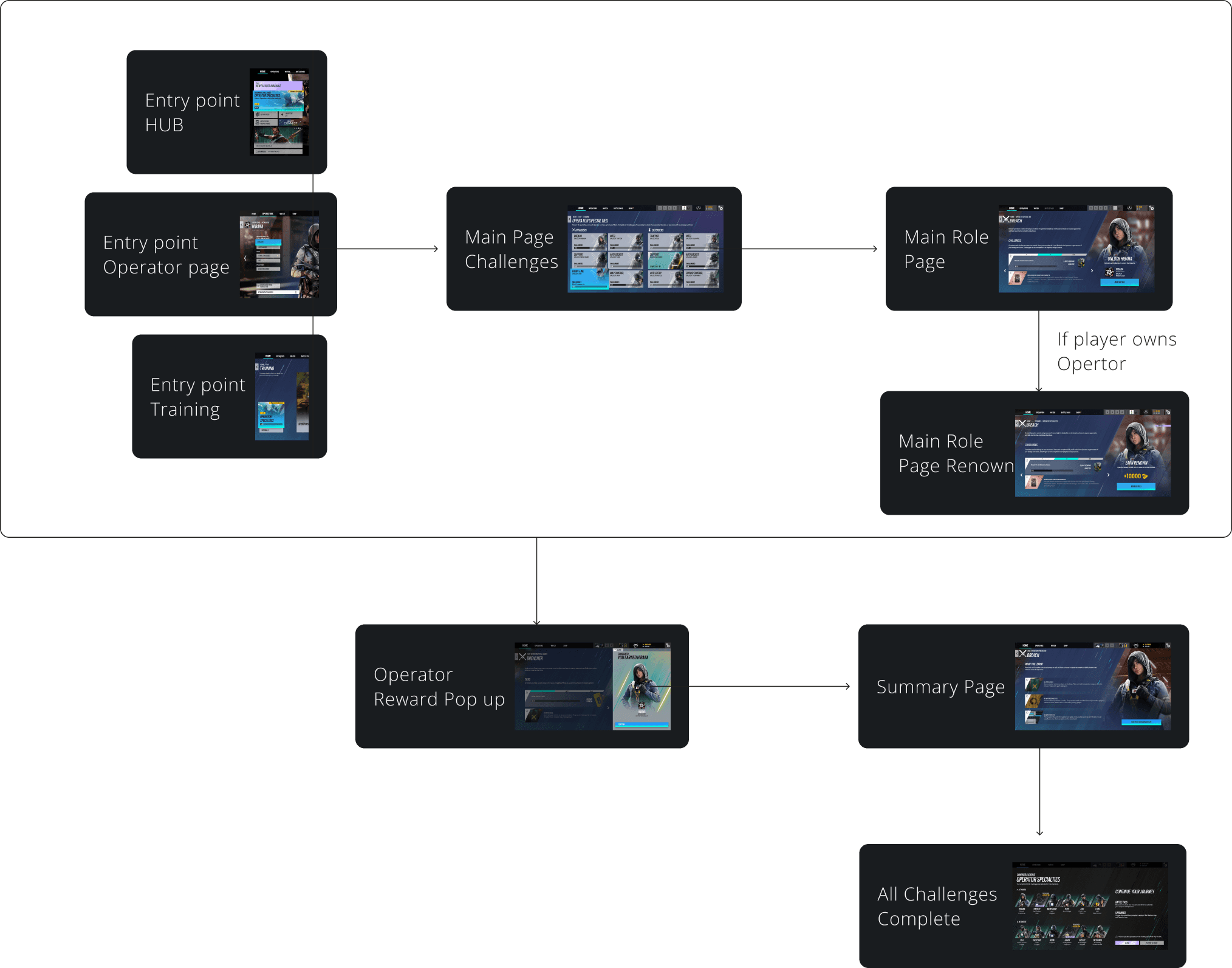
FLOW
FLOW
FLOW
OPERATOR TAXONOMY (WHAT I OWNED)
Defined role buckets + tags (how players think)
Mapped each role to teachable mechanics
Used taxonomy to generate sequential challenges and rewards
OPERATOR TAXONOMY (WHAT I OWNED)
Defined role buckets + tags (how players think)
Mapped each role to teachable mechanics
Used taxonomy to generate sequential challenges and rewards
OPERATOR TAXONOMY (WHAT I OWNED)
Defined role buckets + tags (how players think)
Mapped each role to teachable mechanics
Used taxonomy to generate sequential challenges and rewards
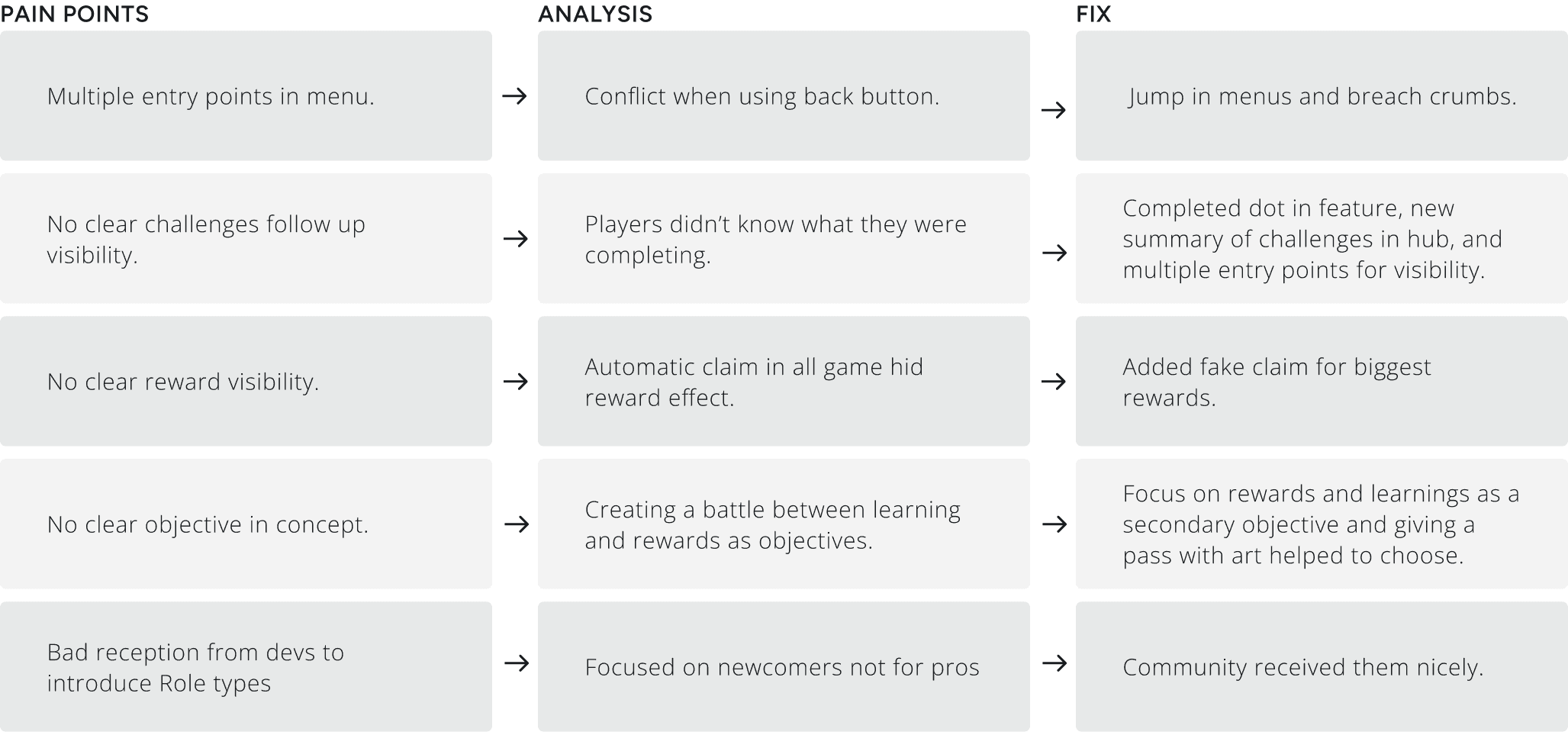
ITERATION CHANGES
ITERATION CHANGES
ITERATION CHANGES
OTHER EXPLORATIONS
OTHER EXPLORATIONS
OTHER EXPLORATIONS
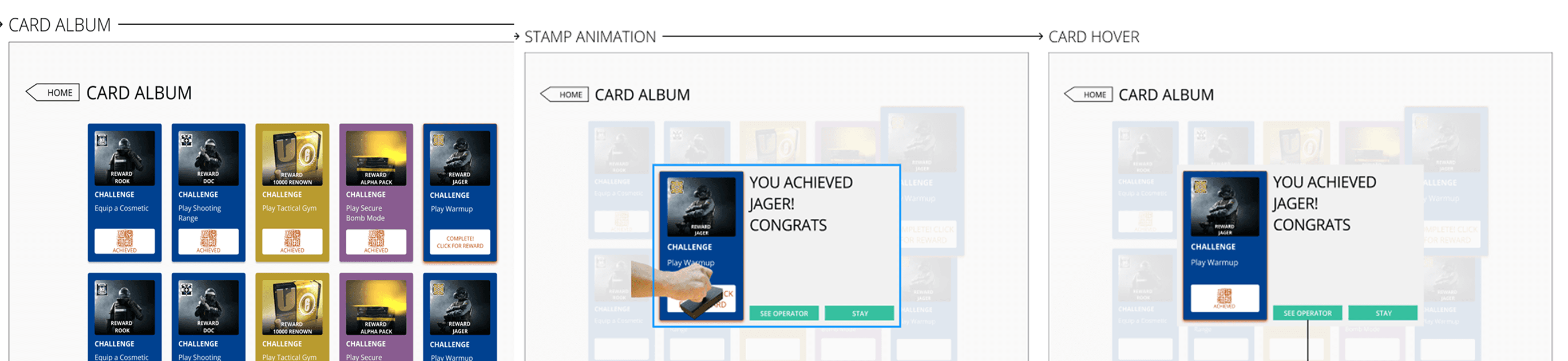
ACHIEVEMENT DRIVEN STAMP
ACHIEVEMENT DRIVEN STAMP
ACHIEVEMENT DRIVEN STAMP
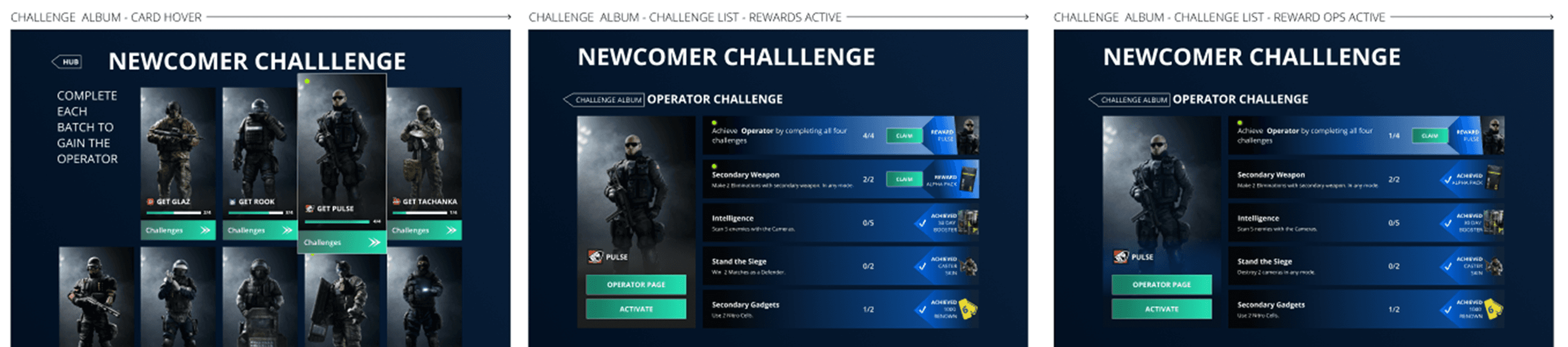
OPERATOR DRIVEN
OPERATOR DRIVEN
OPERATOR DRIVEN
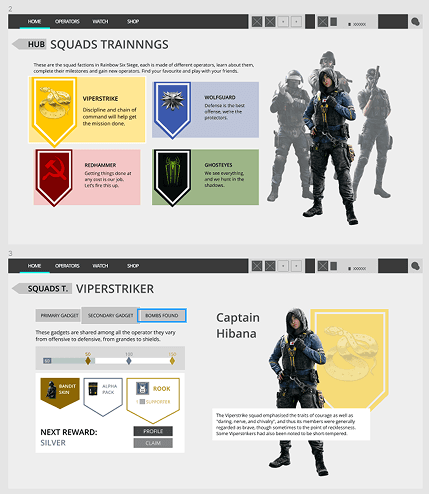
NARRATIVE DRIVEN
NARRATIVE DRIVEN
NARRATIVE DRIVEN
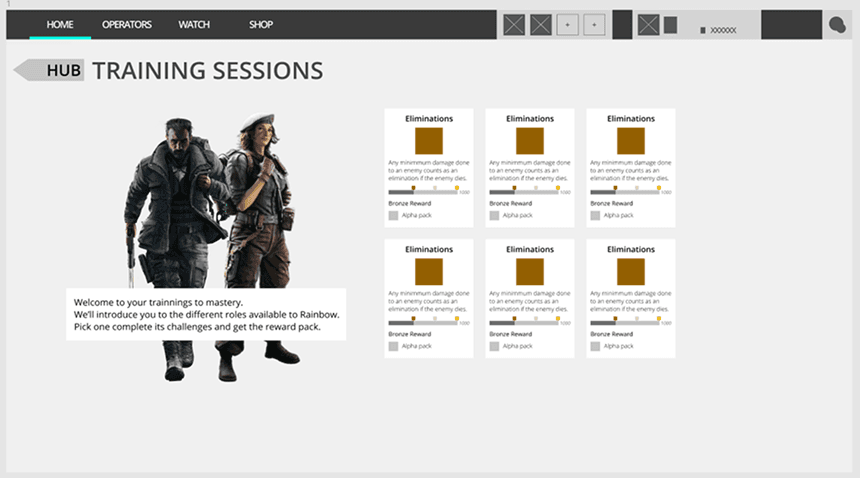
NO CHALLENGES
NO CHALLENGES
NO CHALLENGES
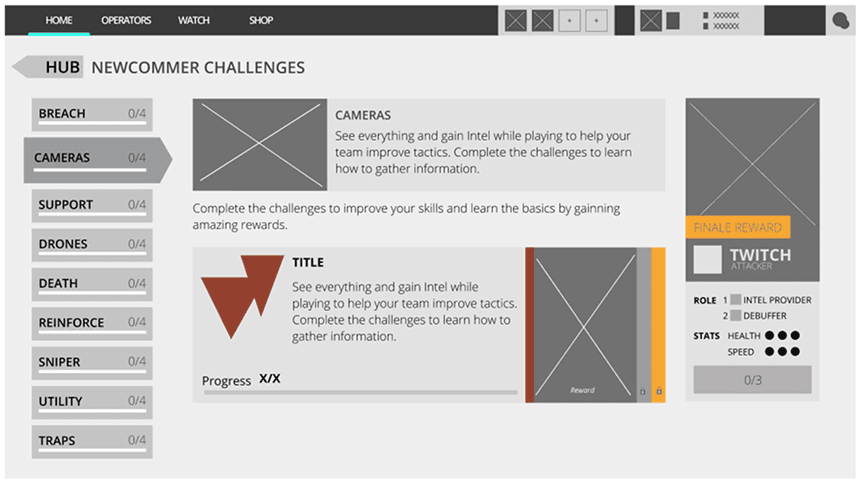
INTERACTION LIST
INTERACTION LIST
INTERACTION LIST
INSIGHTS
INSIGHTS
INSIGHTS
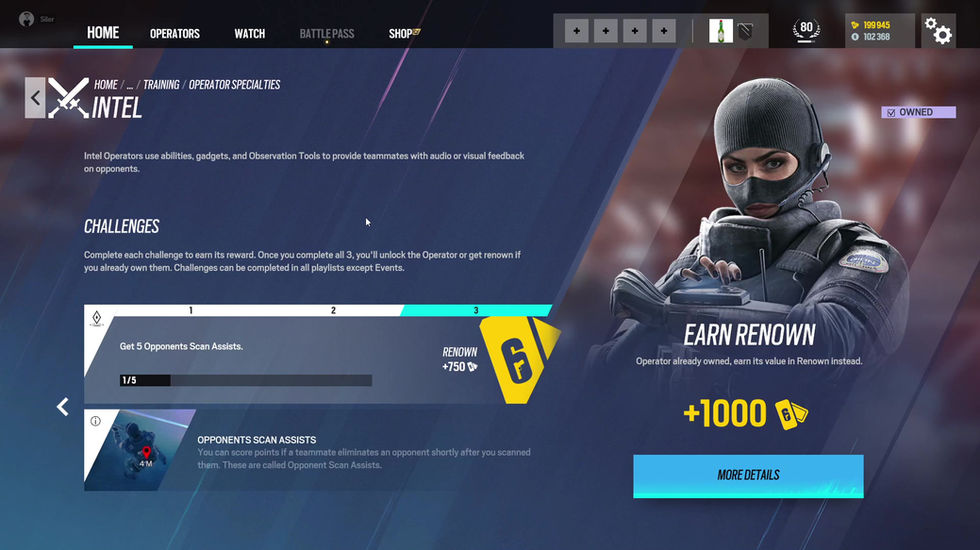
We had long discussions on whether to prioritise learnings or rewards, most competitors were focusing on rewards. In the first release, we focused on learning, which made it very dense as a feature. We saw that players were completing it because of the easiness of challenges, but they were not even realizing they were completing something. This shows how the 100% completion wasn't a good measure.
In future releases, after testing and interviewing users, we decided to move this to the 20+ level, where players are more open to play styles. And we swapped the beginning for easier newcomer challenges.
We had long discussions on whether to prioritise learnings or rewards, most competitors were focusing on rewards. In the first release, we focused on learning, which made it very dense as a feature. We saw that players were completing it because of the easiness of challenges, but they were not even realizing they were completing something. This shows how the 100% completion wasn't a good measure.
In future releases, after testing and interviewing users, we decided to move this to the 20+ level, where players are more open to play styles. And we swapped the beginning for easier newcomer challenges.
We had long discussions on whether to prioritise learnings or rewards, most competitors were focusing on rewards. In the first release, we focused on learning, which made it very dense as a feature. We saw that players were completing it because of the easiness of challenges, but they were not even realizing they were completing something. This shows how the 100% completion wasn't a good measure.
In future releases, after testing and interviewing users, we decided to move this to the 20+ level, where players are more open to play styles. And we swapped the beginning for easier newcomer challenges.
IMPACT
IMPACT
IMPACT
Challenges
Challenges
Challenges
COMPLETION RATE
100%